

Sustainability & Materials
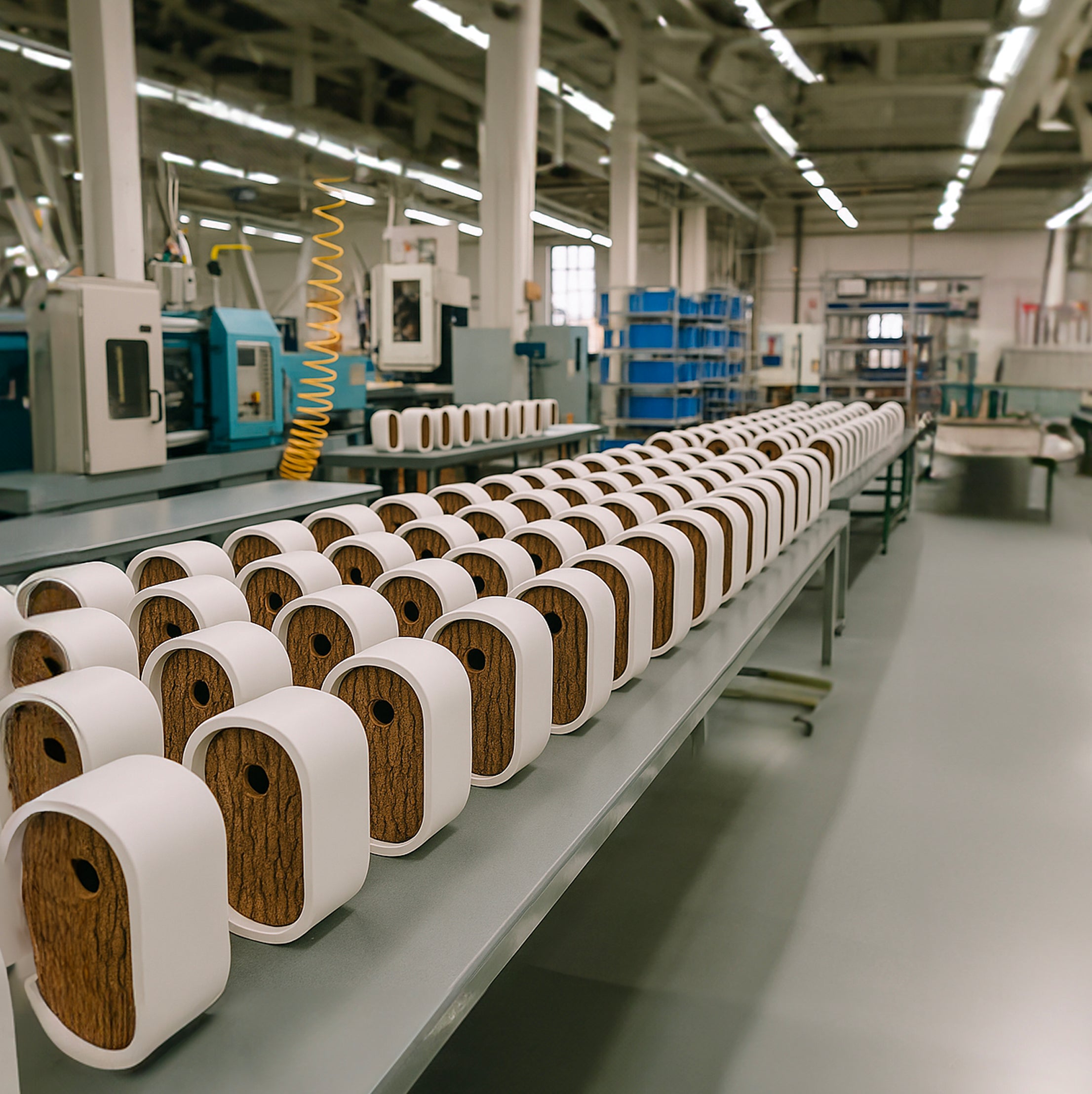
At Beakle, our mission is to bring smart technology into nature’s world with the utmost respect for the the birds, their environment, and the planet as a whole. In designing and manufacturing our smart birdhouses, we’ve made deliberate choices about materials, treatments, and end-of-life recyclability. Below is a more detailed look under the hood — or under the roof — of how Beakle strives to be a truly sustainable, bird-safe product.
Wood as the Foundation: Responsibly Sourced Pine
We build the main body of each Beakle smart birdhouse from premium pine wood, selected specifically for its favorable balance of durability, insulation, weight, and renewability.
- Thermal and acoustic benefits: Wood, especially pine, offers good natural insulation compared with plastics or metal, helping maintain a more stable interior temperature for nesting birds. (Other materials like plastic often trap heat or fail to insulate well.)
- Natural, untreated substrate: We use pine that is untreated and unpressurized—i.e. free from chromated copper arsenate (CCA), creosote, or heavy-metal preservatives, which are known to leach toxic chemicals harmful to wildlife and ecosystems. Alaska Department of Fish and Game+1
- Sustainable procurement: Wherever possible, we source pine from FSC- or PEFC-certified suppliers (or equivalent sustainable forestry programs). This ensures that the forests from which our wood is harvested are managed to maintain biodiversity, forest regeneration, and minimal ecological disruption.
By starting with a natural, renewable wood core, we reduce reliance on synthetic composites and create a base that is inherently more compatible with nature.
Finishes and Treatment: Non-Off-Gassing, Bird-Safe Coatings
A key challenge in building a smart birdhouse is balancing weather protection with safety for birds. We cannot rely on standard solvent-based paints or sealants that emit volatile organic compounds (VOCs) or off-gas over time. That’s why Beakle uses:
- Zero- or ultra-low VOC coatings: Our external surfaces are coated with VOC-free, water-based, or mineral-based paints and stains (for instance, formulations similar to Earthpaint’s non-toxic finishes). These coatings contain no solvents, formaldehyde, lead, or harmful petrochemicals. Earthpaint.net
- Breathable layers, not rigid films: We avoid thick, impermeable coatings on the inner surfaces, enabling the wood to “breathe” and avoid trapping moisture, which can lead to mold or warp. This also helps avoid any buildup of off-gassing chemicals in the enclosed nest chamber.
- Natural preservatives (if needed): For long-term durability, we may apply specialized, low-impact wood treatments such as mineral-based, solvent-free “eco wood treatments,” which are designed not to leave harmful residues or leach into surrounding soil or water. ecowoodtreatment.com
- No interior paint or chemical coatings: We leave all interior walls, floors, and ceilings untreated (or treated only with the bare minimum of bird-safe sealants) so that eggs, chicks, and adult birds contact only natural wood. Many birdhouse guides warn against painting interiors because of chemical off-gassing and interference with humidity regulation. Alaska Department of Fish and Game
Through these measures, the environment inside the nest cavity remains as close to natural wood as possible — no harmful fumes, no chemical residues, and maximum compatibility with the health of the birds.
Smart Electronics, But Respectful Design
Of course, Beakle is a “smart” birdhouse: it contains a small antenna, camera, and supporting electronics housed within a compact PCB enclosure. But our electronics design also reflects our sustainability and safety philosophy:
- Minimal, low-power circuits: We use low-power, efficient components so that heat generation is minimal, avoiding undue thermal impact inside the birdhouse.
- Sealed, bird-safe enclosures: The electronics are encased in a small, sealed housing (often a biodegradable or recyclable plastic or biocomposite) that is isolated from direct contact with nesting birds. Wires are shielded and routed so there is no sharp edge, exposed solder, or risk of entanglement.
- Eco-friendly plastics and components where possible: Whenever feasible, we choose biodegradable, compostable, or fully recyclable plastics or biopolymers for the internal parts (cable insulation, mounts, etc.). We steer clear of long-lived, non-recyclable plastics or halogenated flame retardants known to persist in ecosystems.
- Modular repairability: Our design approach emphasizes repair, not disposal. Key electrical modules can be replaced or upgraded without discarding the entire birdhouse, extending the life of the structure and reducing e-waste.
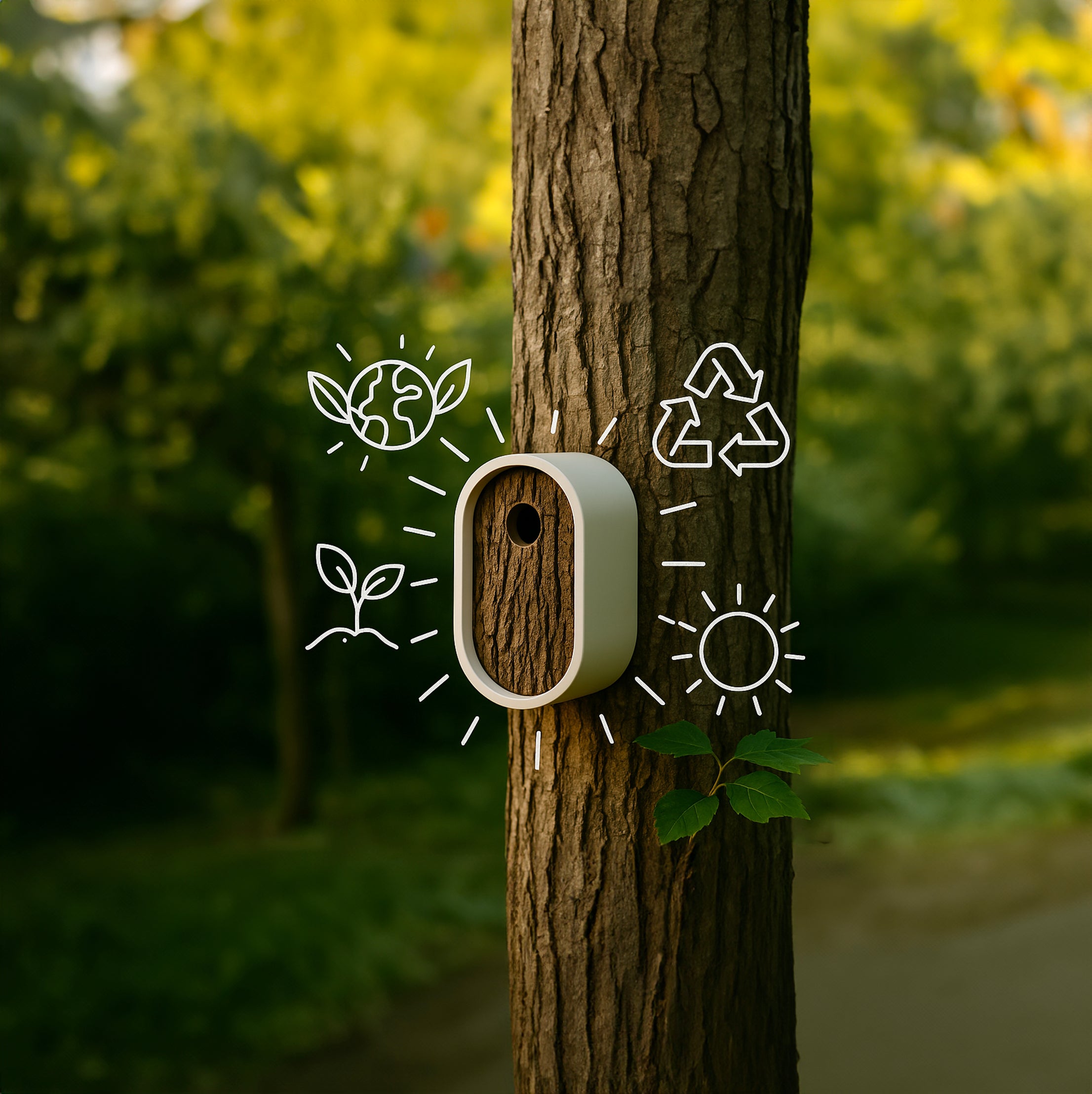
100 % Recyclability & Circular Design
At Beakle, we believe every product should be considered in terms of its whole lifecycle. From cradle to cradle, or at least cradle to safe recycling, our birdhouse is designed to leave no harmful trace.
- Wood and metals are fully recyclable / compostable: At end-of-life, the pine shell can be composted or recycled (if untreated) or processed in wood-recycling streams. Any metal fasteners (stainless or galvanized screws) can be separated and recycled.
- Electronic components handled responsibly: The camera, PCB, wiring, and any plastics are designed for disassembly. We encourage users to return the electronic parts or dispose of them via e-waste recycling channels, ensuring responsible downstream handling.
- No glues or adhesives that prevent recycling: We avoid structural adhesives or laminates that would lock materials into irrecoverable composites. Where adhesives are used, they are low-impact, degradable formulations.
- Lightweight for minimal transport impact: Our overall design keeps weight and volume as low as possible, reducing transportation emissions.
- Durable, not disposable: By combining quality materials, safe finishes, and modular electronics, we aim for longevity. A well-maintained Beakle can last decades, rather than being a season or two of use.
Monitoring Impact & Continuous Improvement
We don’t assume our choices are perfect; we constantly test, monitor, and evolve:
- Field testing: Each Beakle model undergoes field trials to observe how nesting birds respond, how well the materials weather over time, and whether paint or wood treatments show signs of degradation or leaching.
- Material audits: We regularly survey new low-toxicity materials, biodegradable polymers, and sustainable electronics—looking for next-generation upgrades.
- Feedback from users & scientists: We welcome reports from bird enthusiasts, ecologists, and users about how our birdhouses perform in diverse climates and ecosystems, and use that feedback to refine materials and design.
- Transparency & traceability: Where possible, we publish information about the wood batches, coating suppliers, and electronic component specs, so that customers and third-party reviewers can audit our claims.
Why These Choices Matter — For Birds, People & Planet
- Bird welfare first: Minimizing off-gassing, reducing chemical exposure, and maintaining a near-natural internal microclimate protects eggs and chicks from developmental harm or respiratory distress.
- Environmental integrity: By avoiding harmful preservatives and non-recyclable plastics, we reduce the burden on ecosystems and prevent chemical leaching into soil, water, or food chains.
- Consumer confidence: More and more people care deeply about the ecological footprint of their purchases. Beakle stands out as a smart device built in harmony with nature, not in conflict with it.
- Supporting biodiversity: By creating safe, healthy nesting homes in backyards, parks, and forests, we support bird populations, which in turn support insect control, pollination, seed dispersal, and general ecosystem health.